DigiSpon: Digitally Supported Analysis of Spontaneous Speech
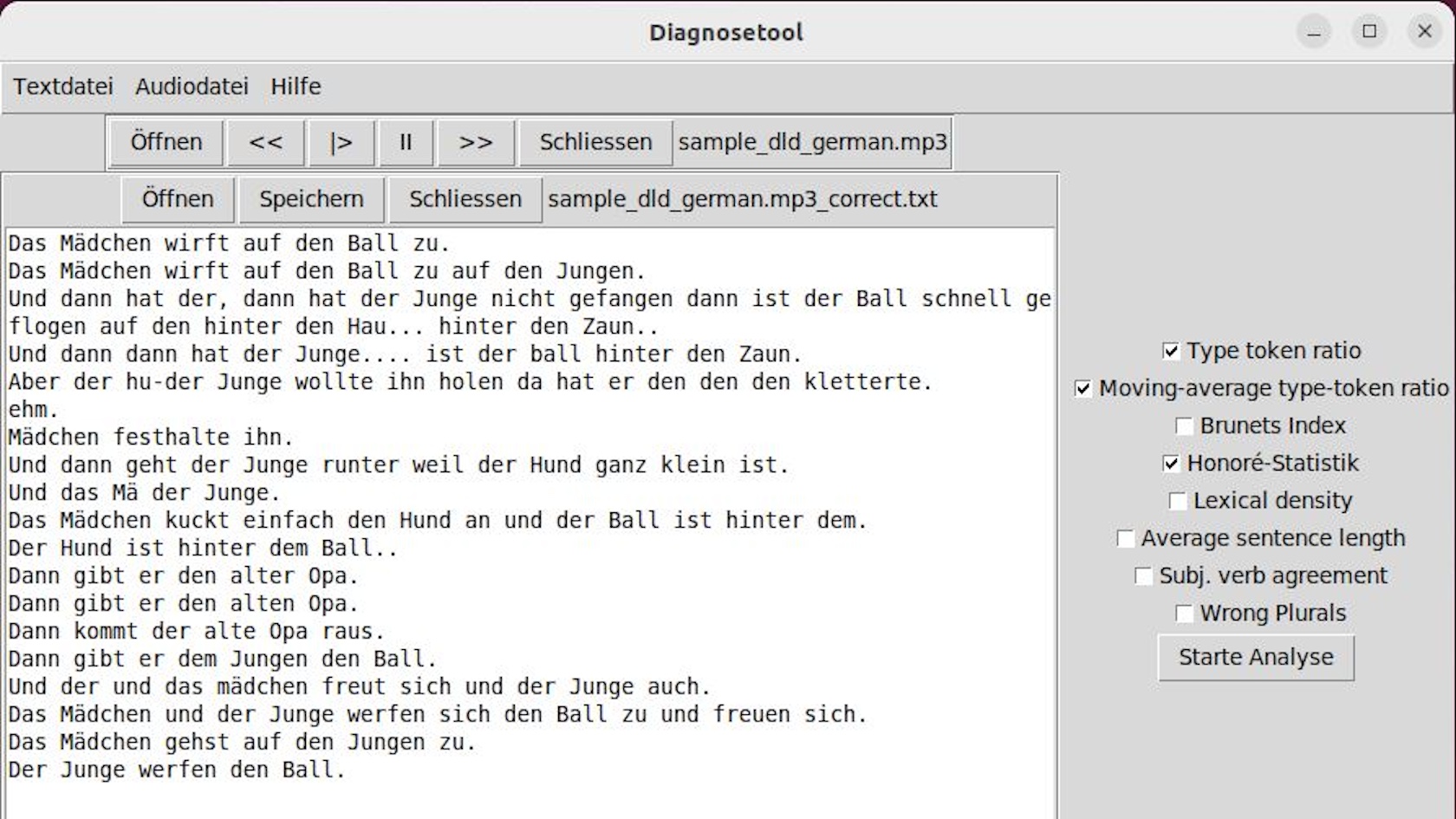
Language sample analysis is a valuable instrument in the diagnostics of language disorders in children in addition to more standardized psychometric tests. However, due to its time-consuming workflow that includes manual transcription, annotation and analysis, language sample analysis is not used often in practice.
This project has at its core research into semi-automatic language sample analysis. The focus is on the development and evaluation of a software which can be used to support speech therapists in the diagnostics of language disorders in children.
In a first phase, the goal is to create a corpus with spontaneous speech of children of ages four to six with typical and atypical language development in Swiss German and Standard German. This data is then used to train automatic speech recognition and automatic language sample analysis models. The process targeted is semi-automatic, with a human (i.e., an expert) in the loop.
The prototype of the software is evaluated in the practical field of speech therapy and used to collect further data. In a subsequent phase, the software is used to gain further insights into indicators of developmental language disorder.
Collaboration
- University of Teacher Education in Special Needs (Interkantonale Hochschule für Heilpädagogik Zürich, HfH) (Prof. Dr. Susanne Kempe)
- University of Fribourg (Dr. Julia Winkes)
- University of Teacher Education Berne (Dr. Pascale Schaller)
UZH Project Lead
UZH Researchers
Project Duration
May 2023 to June 2025
Theses and Publications
- Sophia Conrad (2021): Toward automatic diagnosis of medical conditions involving speech impairment (PDF, 633 KB)
- Sofia Carpentieri (2022): Computer-Assisted Diagnostics of Developmental Language Disorder in German-Speaking Children (PDF, 492 KB)
- Anja Ryser (2023): Development of a Swiss German Language Sample Analysis Tool - Legal and Ethical Aspects of Data Collection (PDF, 2 MB)