Header

Search

Current projects

Additional Information

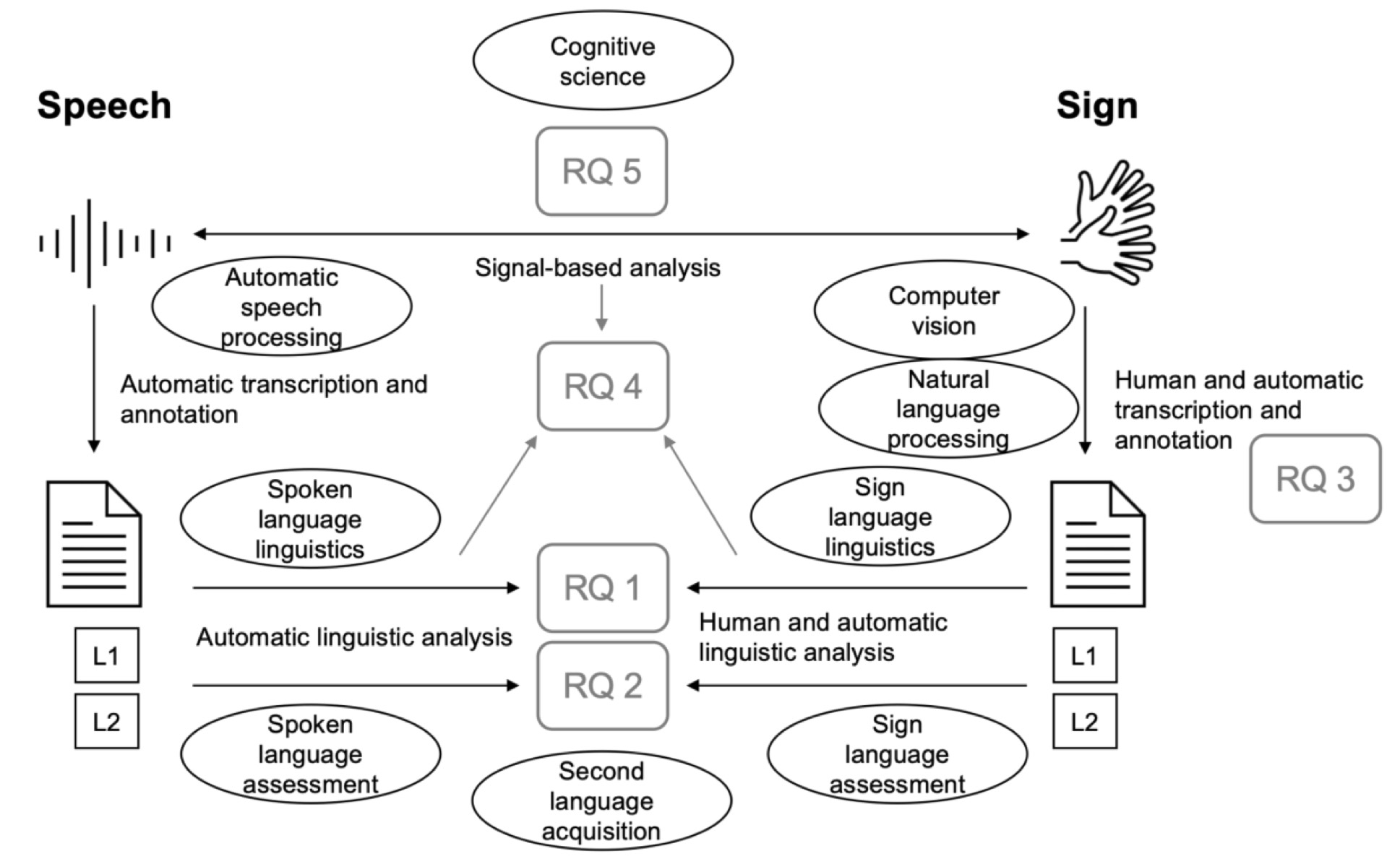
Diagram of the project structure showing the five research questions situated between the modalities speech and sign as well as the disciplines involved in the project: automatic speech processing, computer vision, natural language processing, spoken language linguistics, sign langauge linguistics, spoken language assessment, second language acquisition, and sign language assessment. Further, the two proficiency levels involved (L1 and L2) are shown.

FluSS: Fluency in Speech and Signing

The FluSS project investigates fluency in speech and signing across proficiency levels (L1 and L2).

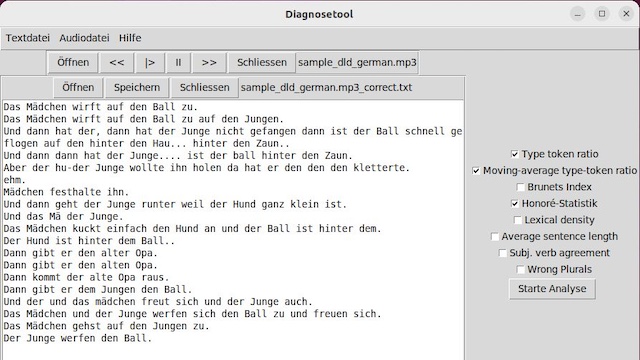
Screenshot of computer-supported language sample analysis interface

DigiSpon: Digitally Supported Analysis of Spontaneous Speech

This project has at its core research into semi-automatic language sample analysis. The focus is on the development and evaluation of a software which can be used to support speech therapists in the diagnostics of language disorders in children. In a first phase, the goal is to create a corpus with spontaneous speech of children of ages four to six with typical and atypical language development in Swiss German and Standard German. This data is then used to train automatic speech recognition and automatic language sample analysis models. The process targeted is semi-automatic, with a human (i.e., an expert) in the loop.
Digilinguo Logo. Two speech bubbles, one yellow, one violet overlap. A check mark in the overlapping area.

Digilinguo: Overcoming language barriers in public institutions

Digilinguo is a platform that promotes sustainable practices in the use of digital translation and language tools, thus allowing for language barriers to be overcome in public institutions. Three channels will be created to help it in achieving this objective: 1) a test track for trying out and testing digital tools, 2) an online platform for the training of interpreting specialists and 3) meet-ups that facilitate the networking of stakeholders from the worlds of research, education and practice.

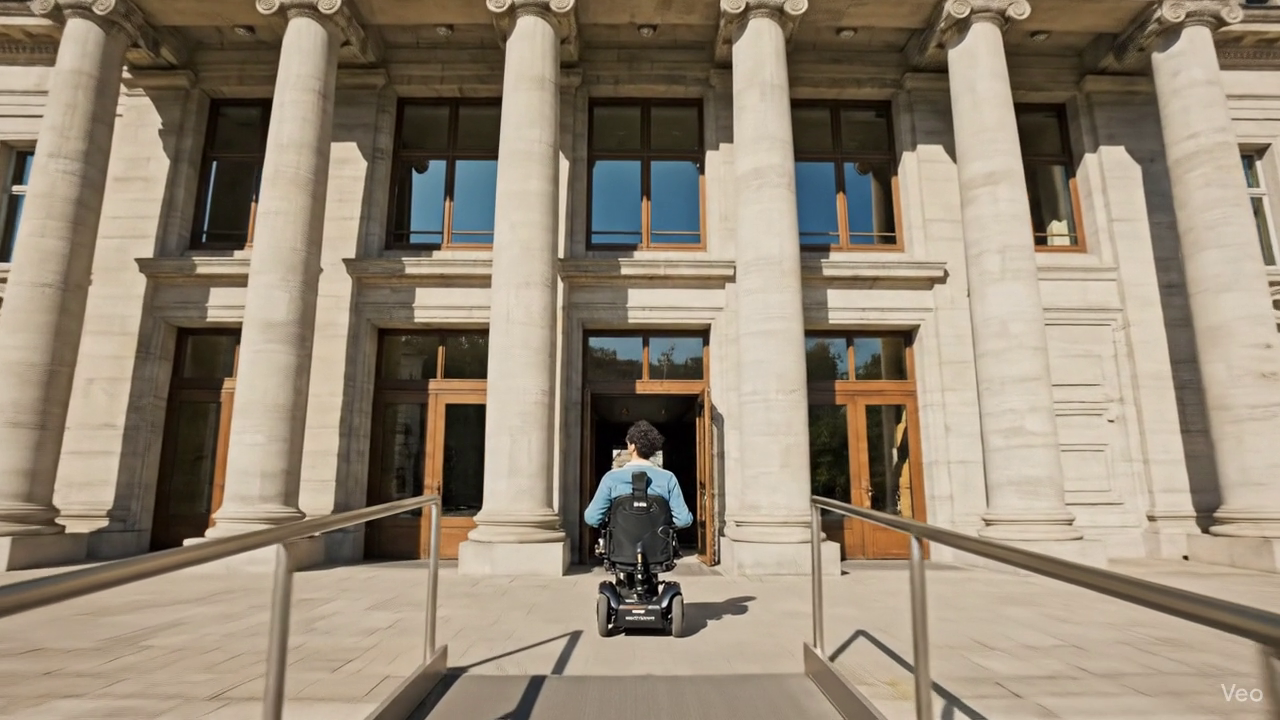
A person in an electric wheelchair is driving up a ramp toward the entrance of a building

MAP: Multimodal Accessibility Planning with AI Systems

The goal of this project is to evaluate large multimodal AI systems (Gemini and equivalent systems) to help users with accessibility requirements to plan journeys that involve navigation in indoor and outdoor public spaces with confidence. The outcome of the project will be an evaluation conducted according to the latest international standards that provides valuable feedback on promoting advance journey planning for persons with disabilities to improve model capabilities.

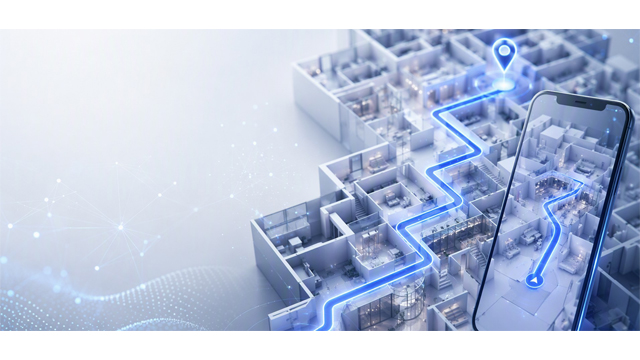
A floor plan with a route marked on it, with a cell phone overlayed showing the route

Indoornavigation@UZH

Finding one’s way on a UZH campus can be challenging, especially for first-year students, visitors, and students and staff with disabilities. The "Indoornavigation@UZH" project is an implementation project involving various departments and divisions at UZH. It aims to improve wayfinding and navigation within UZH by introducing a digital solution that addresses the diverse needs of users.