Header

Suche
Volker Dellwo

Volker Dellwo, Prof. Dr.

  • Associate Professor
  • Phonetics & Speech Sciences

Short bio

Interests: I am interested in a wide variety of phenomena related to human and machine communication with speech. Most of my research has to do with speaker specific (indexical) information in the speech signal and how humans and machines can use such information to recognize individuals. While I worked on the applications of such knowledge in applied areas such as forensic phonetics, I recently became more and more interested in the interaction between indexical and linguistic information in human communication. Please find more information about my research, publications, teaching, software under these links or in the menu on the bottom of the page.


Employment: Since August 2010 I am researching and teaching Phonetics and Speech Sciences at Zurich University (UZH) in Switzerland and occasionally work as an expert witness in forensic phonetics on a freelance basis. Previously I was lecturer in phonetics and speech sciences at University College London (2003-2010) and worked as a consultant and project manager in digital signal processing projects for iQuest Ltd. London. Before that I had research assistant posts at Bonn (2002-3) and Jena Universities (2000-2). I also worked regularly as a guest lecturer at UIMP in Madrid, City University London and Greewich University. In 1999 I was an assistant teacher for German at the Icelandic High School Menntaskólinn í Reykjavík.

Education: I have a PhD in Phonetics and Communication Sciences from Bonn University (with Wolfgang Hess and Petra Wagner) for which I studied the relationships between speech rate and speech rhythm. I have an MA in Phonetics and Linguistics from Trier University focussing on Forensic Phonetics (native language influences on speaker identification abilities by naive listeners). During my studies I spent a year in Santiago de Compostela/Spain (1995) studying the phonetics of Galician, a year at Edinburgh University (1996/97) studying phonetics, digital signal processing and Scottish Gaelic, and I was a guest student in the Phonetics Department at Saarbrücken University (1998).


You can find speech & voice tools I developed on the LiRI Resource Hub Gitbook

Key Projects

Weiterführende Informationen

NCCR - Evolving Language

Mehr zu NCCR - Evolving Language

Time period: 2020 - 2028

Funding: Swiss National Science Foundation (SNSF)

Collaborators: Alexis Hervais-Adelman

Read more: NCCR - Evolving Language

FluSS - Fluency in Speech and Signing

Coming to my office

Office AND-2.38
Andreasstr. 15
CH-8050 Zurich
Switzerland

Map

Phone: +41(0)44 634 2995

Email

How to find my office 2.38 within building AND:
- Take 'Lift C' to the second floor.
- Go through the left glass door behind the lift and turn left.
- Go through the next glass door and turn left. 
- My office is the 3rd office on the right as you walk down that corridor.

Contacting me by mail

I am sorry to report that email communication becomes increasingly challenging because of the large numbers of incoming mails (average response rate ~25%). As a rule of thumb: if you do not receive an answer within the same week, the chance that you will drifts towards zero. I am very unhappy about this situation and wish to apologise sincerely for the trouble this may cause.

Resending your mail sometimes helps but should you wait for an urgent reply it also helps to contact:

  • Claudia Leibundgut (claudia.leibundgut@uzh.ch) for administrational, personnel and financial issues.
  • Alexandra Buenzli (buenzli@cl.uzh.ch) for Department of Computational Linguistics.
  • Elisa Pellegrino (elisa.pellegrino@uzh.ch) for Phonetics & Speech Sciences Group and CFPA.


Electronic IDs

Courses

Please find a list of all phonetics courses here: About the program: Phonetics & Speech Sciences

PhD supervision:

Current PhD candidates:

Alessandro De LucaAndrea Fröhlich,Aref Farhadi Pour,David Manuel GrünertErdem Baha TopbasMasoumeh ChapariniyaMing JinSadia AzadTimothy Tianze Xu

Completed PhDs:

Alejandra Pesantez Pesantez (Second language acquisition),Konstantinos Dimos (The phonetics of theatrical speech) ,Leah Bradshaw (Indexical Dynamics), Luca Marra  (Speech and gestural communication), Omnia Ibrahim  (Speech Dynamics), Valeriia Vyshnevetska (Interdisciplinary approaches to voice recognition), Yu Zhang (Between-speaker rhythmic variability)

Key Publications

Weiterführende Informationen

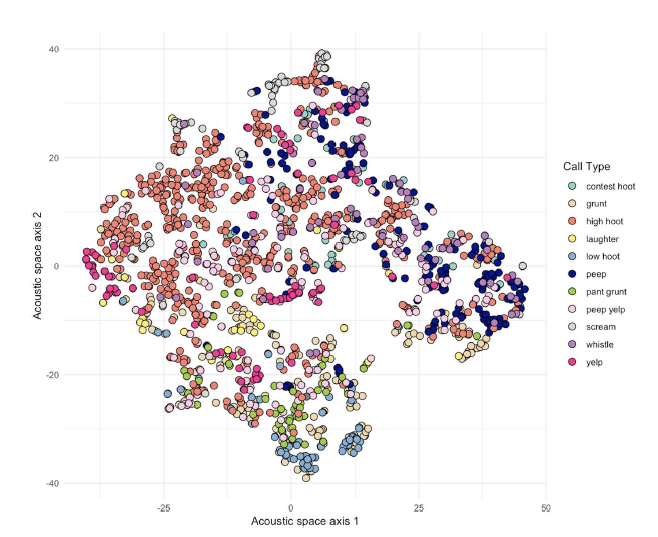
T-SNE scatterplot illustrating how the 11 call types from the updated vocal repertoire cluster together based on similarity in their acoustic structure. Each point in the scatterplot represents a call and the different colours of the points depict the different call types.

An updated vocal repertoire of wild adult bonobos (Pan paniscus)

Mehr zu An updated vocal repertoire of wild adult bonobos (Pan paniscus)

Research on bonobo and chimpanzee vocal behaviour has grown, yet most work relies on unvalidated qualitative call repertoires. Quantitative data are essential for understanding species-wide communication and for comparisons across primates. We provide the first quantitative validation of a Pan vocal repertoire using wild bonobo calls. Analysing more than 1500 calls from 53 adults over 33 months with random-forest models, we identify 11 acoustically distinct call types. We also discuss challenges in defining vocal repertoires from field data and suggest future methods for capturing the graded complexity of bonobo vocal communication.

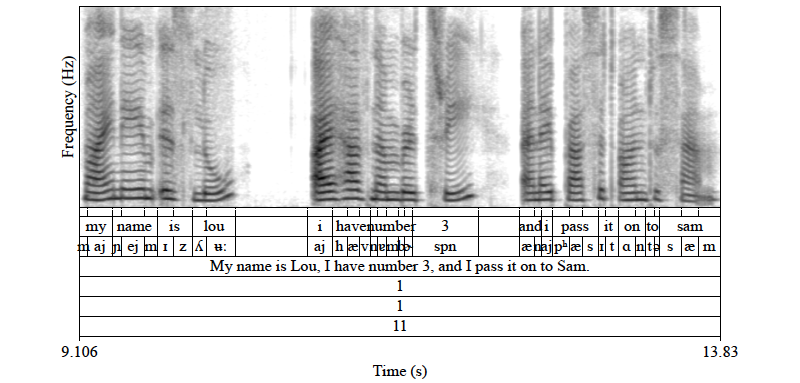
Example utterance after post-processing steps. Tiers from top to bottom: words, phones, sentence, truth, trusted, score. Spectrogram settings: view range = 0Hz-6000Hz, window length = 0.05s, dynamic range = 90.0 dB.

NumberLie: a game-based experiment to understand the acoustics of deception and truthfulness

Mehr zu NumberLie: a game-based experiment to understand the acoustics of deception and truthfulness

We introduce the NumberLie game, a method for collecting natural deceptive speech with precise ground-truth labels and immediate consequences for lying. The setup enables isolated, simultaneous audio recording of multiple players in a controlled lab or online environment as they engage in a number-based deception game. We detail the technical features that ensure accurate truth–lie classification and real-time outcomes, supported by performance-based financial incentives. The design is highly adaptable, allowing researchers to manipulate conditions while minimising extraneous variability.

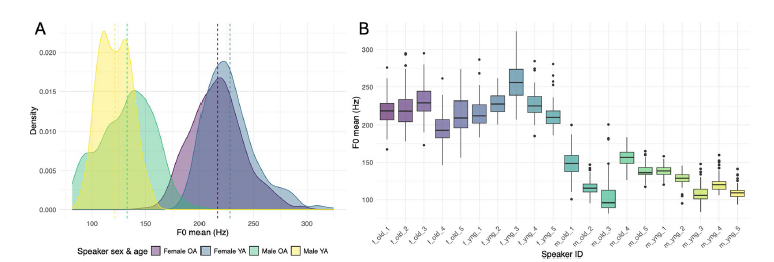
A Density plots showing distributions of mean f0 values for younger and older, as well as male and female speakers. Dashed lines represent group means. B Boxplots showing mean, range and interquartile range of mean f0 values per speaker. ‘f_old’—older female speakers, ‘f_yng’— younger female speakers, ‘m_old’—older male speakers, ‘m_yng’—younger male speakers. 1, 2, 3, 4, 5—individual speaker IDs

Listeners are biased towards voices of young speakers and female speakers when discriminating voices

Mehr zu Listeners are biased towards voices of young speakers and female speakers when discriminating voices

Own-age advantages are well documented in face recognition, but it is unclear whether they occur in voice recognition. Younger (n=42) and older adults (n=32) completed a same/different speaker discrimination task involving younger and older speakers of both sexes. Sensitivity (d′) showed no speaker–listener age or sex interactions. Instead, younger listeners outperformed older listeners, and male voices were discriminated more accurately than female voices. Response bias (c) indicated a stronger “same” bias for younger and female speakers. These results inform models of voice identity processing and have implications for forensic contexts involving earwitness judgments.

Latest Publications

ZORA Publikationsliste

Download-Optionen

Publikationen

  • was-ist-phonetik-thumbnail

    Was ist Phonetik

    Video abspielen
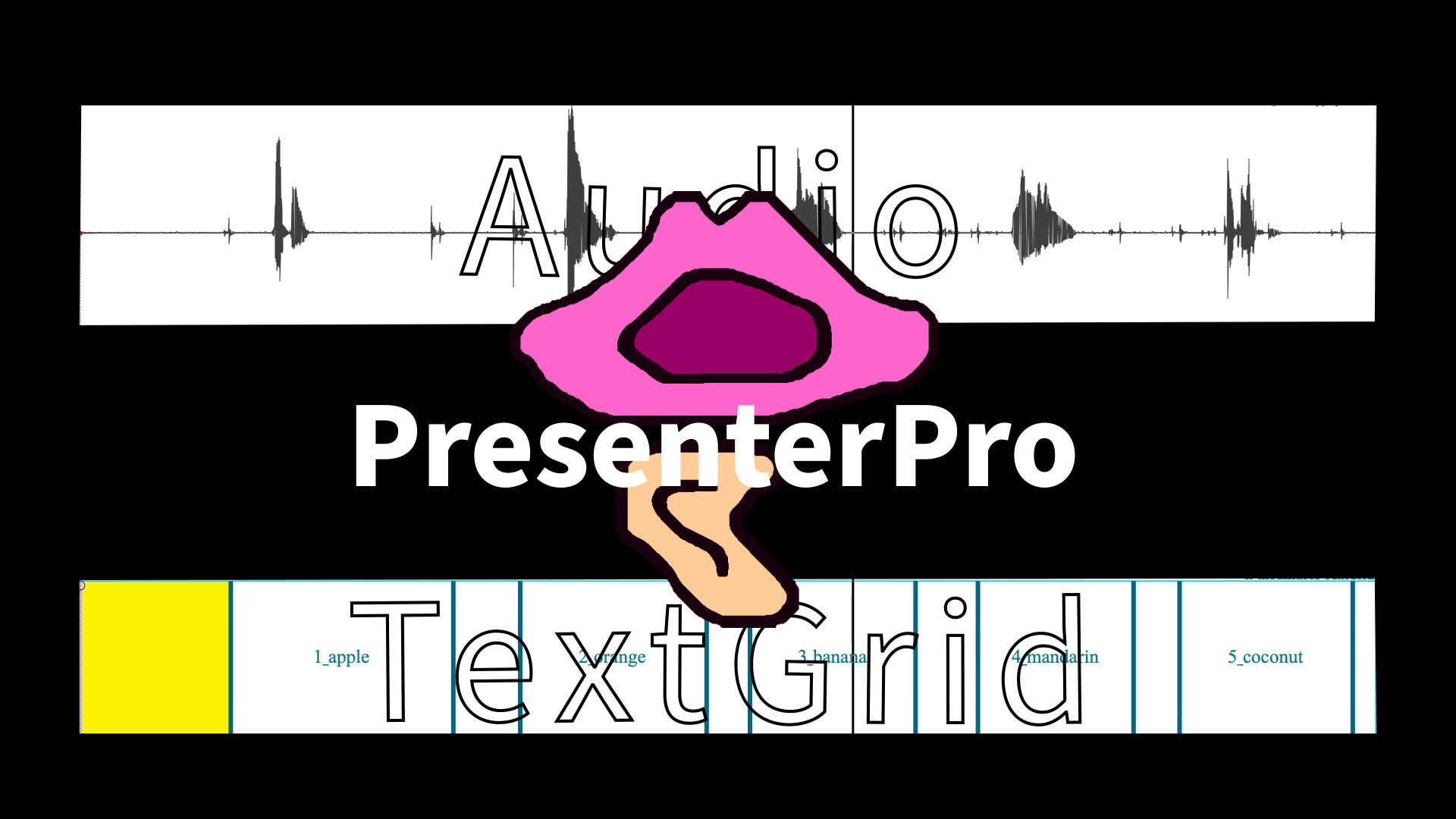
  • presenter_pro_compressed_thumbnail

    PresenterPro: How to prompt participants with Praat

    Video abspielen
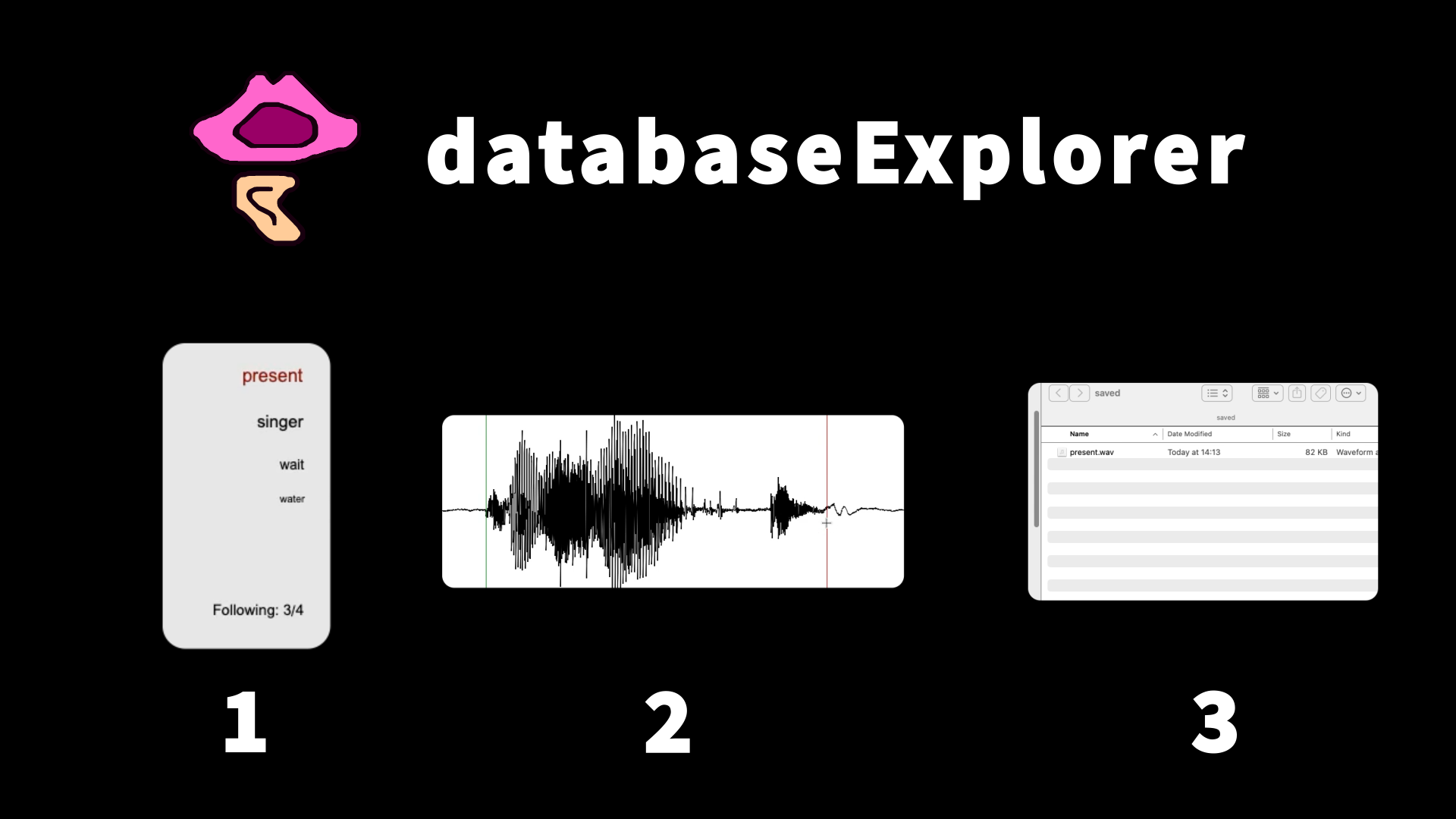
  • databaseExplorer_compressed_thumbnail

    DatabaseExplorer: How to edit a speech corpus with Praat

    Video abspielen
  • ema_tr_compressed_thumbnail

    Electromagnetic Articulography: How to measure the movements of articulators

    Video abspielen

Weiterführende Informationen

Office Address

AND-2.38

Andreasstr. 15
CH-8050 Zurich
Switzerland

Map

Phone: +41(0)44 634 2995

Email

Phone or office appointments

Please book phone or office appointments with the admin office:

Tamar Tolcachier
Email

Master Thesis in Phonetics

If you are interested in a MA thesis in Phonetics & Speech Sciences, please fill in this form.