Bachelor's and Master's degree programs of the Department of Computational Linguistics
Table of contents
- Overview Bachelor's and Master's degree programs
- New from fall semester 2026: BSc and MSc Degree programs
- Bachelor and Master study programs "Computational Linguistics and Language Technology" (Major/Minor)
- Master's study program "Digital Linguistics" (Minor)
- Focus «Digital Linguistics» and «Phonetics» in the study program «Linguistics»
- Guidelines, Regulations and Further Information
- Computational Linguistics Courses in other study programs
Overview Bachelor's and Master's degree programs
|
Bachelor's and Master's Programs at the Department of Computational Linguistics
In the Monomaster (120) "Linguistics" (for more information, please consult the website of the study program «Linguistics»)
|
New from fall semester 2026: BSc and MSc Degree programs
Starting in the fall semester of 2026, students enrolling in the major will graduate with a Science degree. The new degree designations are:
Bachelor and Master study programs "Computational Linguistics and Language Technology" (Major/Minor)
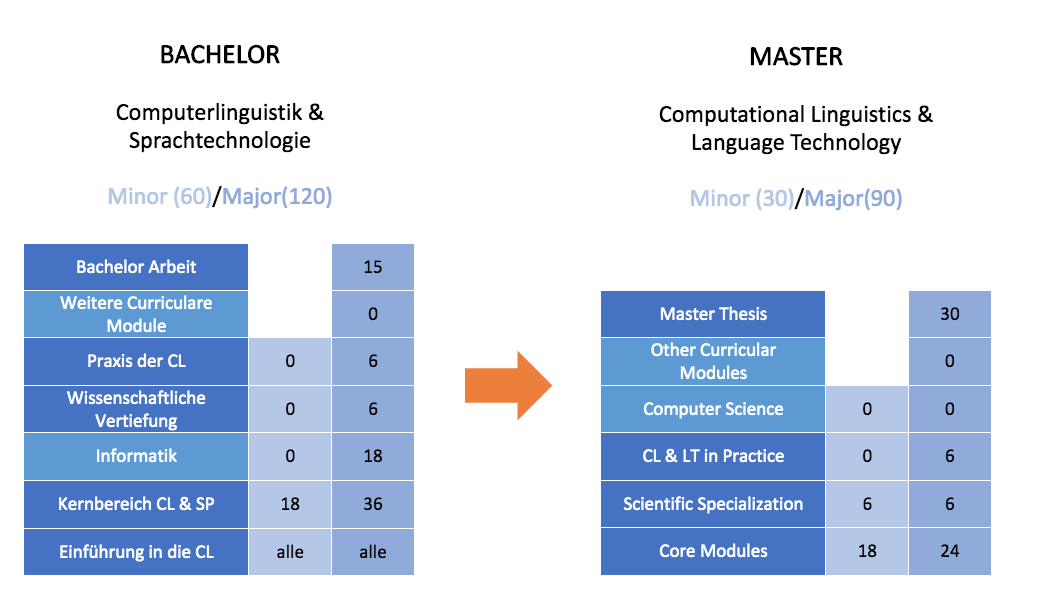
The study program "Computational Linguistics and Language Technology" offers lectures in the areas of computational linguistics, language technology, phonetics and speech signal processing, and cognitive linguistics. The courses combine general knowledge in linguistics and computer science with specific knowledge and skills in computational linguistics. Both study and work in this field require both a strong enjoyment of the use and analysis of languages and a keen interest in computer science.
Study regulations
Bachelor:
- Major 120: Computerlinguistik und Sprachtechnologie
- Minor 60: Computerlinguistik und Sprachtechnologie
International Master (the study program is held in English):
Master's study program "Digital Linguistics" (Minor)
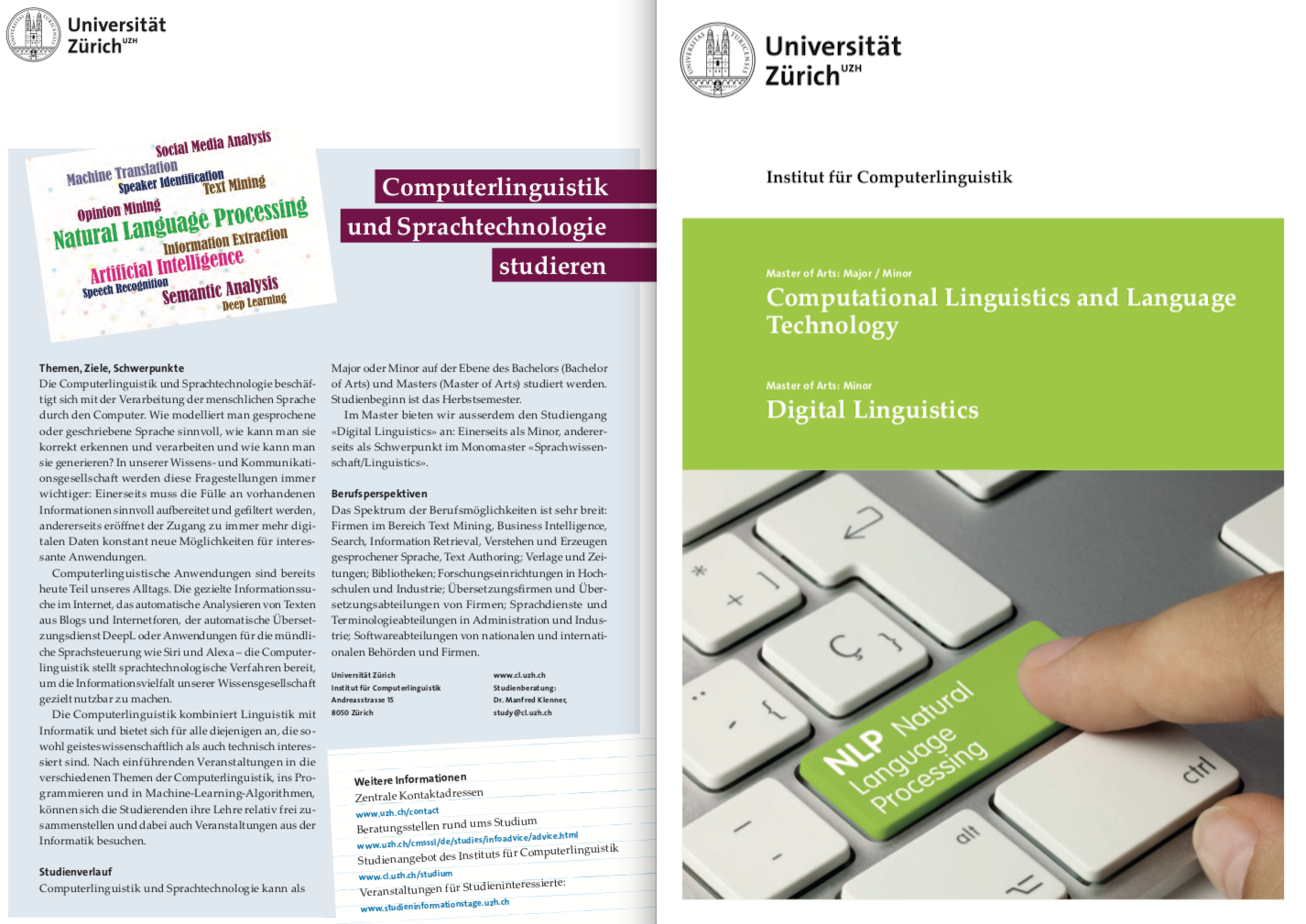
The international Master's program Digital Linguistics requires no previous knowledge and allows an easy entry into the field of Computational Linguistics. It is therefore ideally suited for students without any prior technical knowledge. After the obligatory introduction to the field and to programming, students can freely choose from a variety of lectures.
Study regulation
Master Minor 30: Digital Linguistics (in English)
Please note: The Master’s minor program Digital Linguistics is not intended for students who have already completed a major or minor in Computational Linguistics during their Bachelor’s studies. Students with prior training in Computational Linguistics are advised to enroll instead in the Master’s program Computational Linguistics and Language Technology.
Focus «Digital Linguistics» and «Phonetics» in the study program «Linguistics»
The Department of Computational Linguistics offers two focus areas within the interdisciplinary Master’s program in Linguistics: Digital Linguistics and Phonetics. In addition, the department contributes to most of the introductory courses in the program.
The Linguistics program with the focus area Digital Linguistics is particularly suitable for students without prior technical training who wish to enter the field of computational linguistics. The focus area Phonetics prepares students for research-oriented careers in this domain.
For further information about the program, please consult the Linguistics Master’s study program Linguistics page.
Please note: The focus area Digital Linguistics is not intended for students who have already completed a major or minor in Computational Linguistics during their Bachelor’s studies. Applicants with prior training in Computational Linguistics are advised instead to enroll in the Master’s program Computational Linguistics and Language Technology.
Guidelines, Regulations and Further Information
You can download all relevant guidelines, study regulations and other documents for studying Computational Linguistics and Language Technology and Digital Linguistics on our downloads page.
For details about the study program Linguistics, please consult the page of the study program Linguistics.
Computational Linguistics Courses in other study programs
Elective courses in Computational Linguistics for the Computer Science degree : in most study programs (Major and Minor), courses in Computational Linguistics can be taken as electives. Please inform yourself directly on the website of the Department of Computer Science.
Note for the students of ETH : You can take Computational Linguistics lectures for your 10 freely available, non-subject-related points. Please contact our Student Consultation Service to select lectures that make sense for you.